Is it possible to hitchhike in a Siberian wasteland twice the area of Denmark? The answer is yes, if you take helicopters, trains, reindeer sledges and rubber boats to help. But it is certainly not as easy as I thought it would be and inevitably you’ll walk further than you expect. A 150 km walk turned into a 350 km hike. In the summer of 2009 I went back to my beloved Yamal Peninsula in north west Siberia – an endless tundra region where reindeer nomads live as they have done for centuries. This is despite Gazprom's plans to open up the centre of the world's largest natural gas production. This is a story about travelling alone on foot in the Arctic, with all the hardships and privations entailed. But also the story about a proud people, where women and men live a harsh life open to the elements – and where their hospitality against all odds still is so large that it makes an indelible impression on any traveller. See more photos from my previous trips to Yamal: winter and summer.
|
 Next generation of reindeer nomads. |
 Caught with the lasso. |
 Ready to get the antlers sawn off. |
 Crossing Gazprom’s concrete roads |
| |
 Bovanenkovo gas field. |
 Selection of reindeers to pull the sledges. |
 Moving the camp. |
 Driving in the old caravan trail. |
| |
 Summer time before mosquito season is booming. |
 Driving close to Gazprom’s derrick. |
 Water everywhere - it is difficult to be dry-shod on Yamal. |
 A women chooses the reindeers to pull her own sledge. |
| |
 Selection of reindeers. |
 From childhood the nomads learn how to drive a sledge. |
 Crossing a river with sledges and 1500 reindeers. |
 The camp is moved almost every day during the summer. |
| |
 Mosquito season has begun. |
 From an early age nomads learn to throw the lasso. |
 Drying fish. |
 Packing of sledges – gas fields in the background. |
| |
 Although it is summer, it may be cold, but then it's good with a hood. |
 Preparation of fried reindeer antlers. |
 The reindeer skin must be softened before it can be used to sew clothes. |
 An old burial place – more than 100 years old. |
| |
 In the summer time the reindeers are being herded around the clock. |
 Fresh fish is eaten raw. |
 The reindeer team is being managed with a 9 feet long rod. |
 Midnight Sun. |
| |
 The nomad tents ( 'chum') are raised within less than half an hour. |
 Mosquito season is at its peak. |
 Cleaning fresh fish - eaten raw. |
 Father, mother and kids – plus some of the neighbor’s kids! |
| |
 A helicopter visit - buying reindeer antlers. |
 Crossing the Mordyjakha River. |
 Driving in the old caravan trail. |
 Frying fish over open fire – firewood consists of willow twigs. |
| |
 The reindeer gives nomads everything: food, clothing and transportation. |
 The summer on Yamal is short – approx. two months. |
 The herds count up to 9000 reindeers. |
 The reindeers to pull the sledge have been found. |
| |
 A short tea break before moving camp. |
 The mosquitoes bother everyone - both humans and animals. |
 A calf who lost his mother is taken into the tent. |
 Even adult reindeers may have difficulty coping with mosquitoes, and therefore they are sometimes taken into the tent. |
| |
 Help to cross a small river. |
 The reindeers are gathered using a long rope. |
 The reindeer is a true gregarious animal - herds can count up to 9000 reindeers. |
 Usually it is women who keep the rope, while men choose the reindeers to pull the sledges. |
| |
 Selection of reindeers, which will pull the sledges. |
 The rope is lowered, so the man can get out with the selected reindeer. |
 It is almost windy every day on the Yamal Peninsula - a scarf keeps you warm. |
 Ready to slaughter a reindeer. |
| |
 The reindeer is being skinned. |
 Liver and selected parts are eaten raw - and the warm blood is regarded as a delicacy. |
 Dogs help the nomads to gather the reindeers. |
 The children are often born in the tents and quickly learn to adapt to the harsh life on the tundra. |
| |
 The beach along the Kara Sea. |
 The 9th brigade from Panayevsk state farm - 500 km from home. |
 Year-round the nomads are living in their tents on the tundra. |
 Tundra flowers only have a few months to spread during the short summer. |
| |
 Victoria – the place where Gazprom's pipelines are put into the sea and connected with the mainland. |
 A falcon guarding her nest. |
 Nestling falcon. |
 Ivan - a Russian fisherman who settled on the tundra. |
| |
 Alone on the tundra. |
 Ripen cloudberry in the middle of August. |
 Approaching storm. |
 Thunderstorms on the tundra. |
| |
 The storm is over. |
 Here dinner is paid in the Yuribei Station canteen. |
 Eating in the canteen at Yuribei Station. |
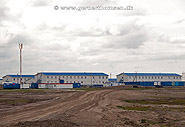 Yuribei Station – midway on the Gazprom’s railway road. |
| |
 Railway bridge over Yuribei River – the bridge continues another four km across the main river in the background. |
 The summer draws to an end - soon autumn storms begin. |
 The reindeer to pull the sledges has been found. |
 Driving in caravan along with the rest of the reindeer herd. |
| |
 The white reindeer is rare. |
 A nomad family typically consist of 4-6 children. |
 Gazprom’s railway road. |